
Packaging and labels for Made in Rwanda brands
2026-07-30 · 7 min
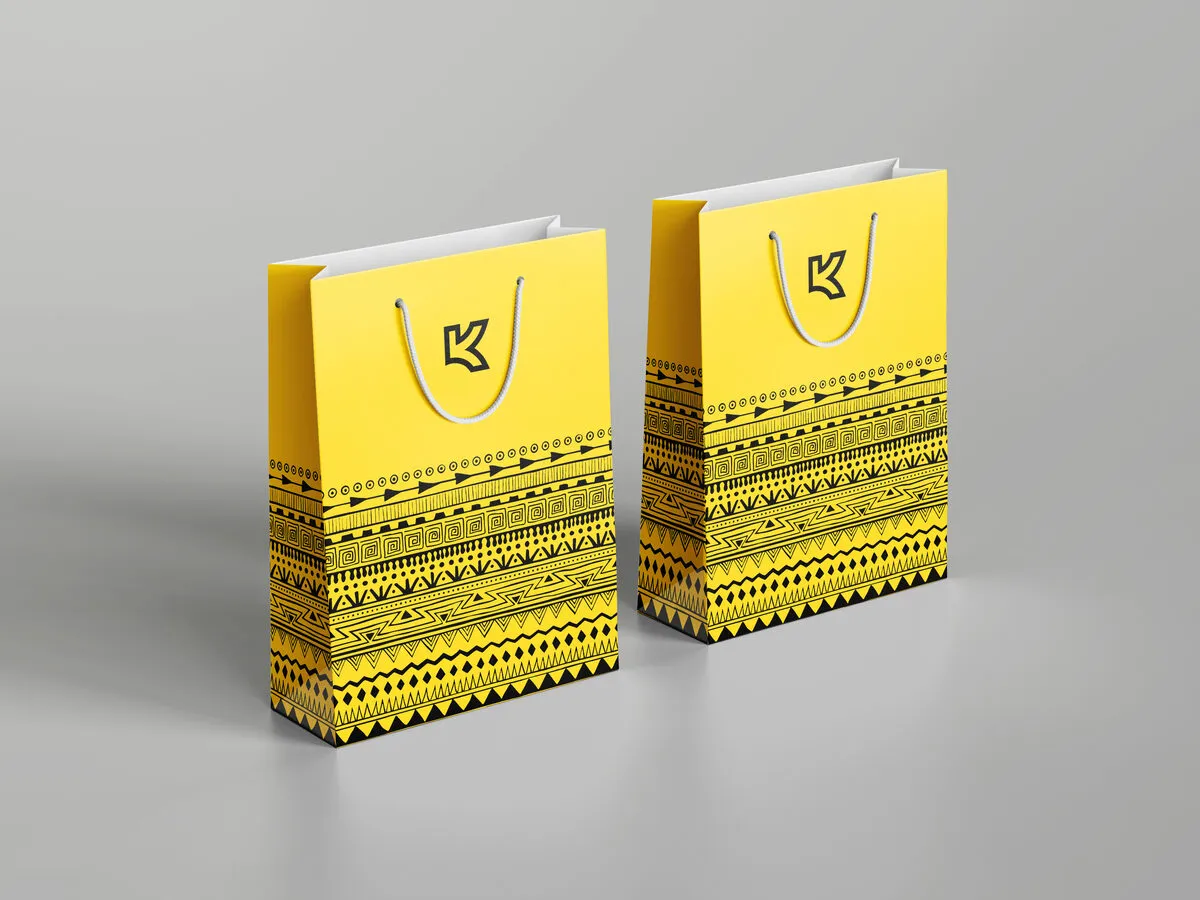
A Made in Rwanda product almost never gets a shelf to itself. It sits beside an import with a far bigger budget, and the shopper decides in about three seconds. Packaging is what wins those three seconds. The good news for makers in Kigali is that shelf-ready packaging costs far less than most people expect: printed product labels start at around RWF 15,000, labels on a roll at RWF 25,000, printed paper bags at RWF 30,000 and custom printed boxes at RWF 50,000. Here is what to print first, what belongs on the label, and where a small packaging budget does the most work.
Start with the label, not the box
Nearly every Rwandan brand we work with starts the same way, and it is the right way: buy a plain jar, bottle, pouch or tin, then put a well-designed label on it. A good product label does most of the job of custom packaging for a fraction of the price, and it lets you change your design next month without throwing away a pallet of printed boxes. If you fill by hand in small batches, labels cut on sheets are the simplest. If you are filling hundreds of units at a time, ask for labels on a roll instead - they apply far faster and they sit straight, which is the difference between a shelf that looks professional and one that looks homemade. For soap, oils, honey and anything that sweats in a fridge, choose waterproof labels. For glass bottles where the product itself is the best thing about it, clear labels look expensive and cost very little more.
What belongs on a Rwandan product label
A label has two jobs: sell the product, and carry the information a buyer or an inspector expects to find. Keep the selling side short - your brand name readable from two metres away, and what the product actually is in plain words, because "Ubuki" tells a visitor nothing while "Pure Rwandan honey" tells them everything. Then leave room for the practical block, usually on the back: net weight or volume, ingredients, the batch or production date and the best-before date, where it was made, and a phone or WhatsApp number people can genuinely reach. If you plan to sell through supermarkets you will need a barcode, so design the space for it now rather than squeezing it in later. If your product is certified, the Rwanda Standards Board mark goes on the pack as well. Requirements differ by product category, so confirm what applies to yours with RSB before you commit to a long run - asking costs nothing, and it can save an entire order.
Choose the pack for the journey it makes
Ask where the product travels and the right pack answers itself. For a product going onto a shop shelf, a custom printed box holds its shape, stacks neatly and gives you five printable faces instead of one. For online orders going out by courier or moto, a mailer box is built to survive handling and turns delivery into a moment worth photographing. For markets, craft fairs and your own shop counter, printed paper bags are the cheapest advertising you will ever buy, because every customer carries your name across town for free. For hampers, corporate gifting and export samples, gift bags and rigid luxury packaging lift a modest product into a present. And for baskets, textiles, jewellery and anything handmade, a printed swing tag on a string is often all the packaging you need - it carries your story, your price and your logo for a few hundred francs a unit. Anything that touches food should be printed on food-safe packaging, so tell us what goes inside before we quote.
Materials that survive our climate and our roads
Packaging in Rwanda has to get through more than a photo shoot. Rainy-season humidity lifts cheap self-adhesive labels off glass. Cooking oils and shea butter soak straight through uncoated paper and leave a stain around your logo within a week. A box that travels to a shop in Rubavu or Musanze on a full lorry arrives with scuffed corners if the board is thin. Three choices fix nearly all of it: a laminate on the label, which adds very little to the price and stops both moisture and rubbing; a coated or synthetic face stock for anything oily, chilled or wet; and a heavier board for boxes that travel outside Kigali. Matte lamination suits natural, honest brands and is easy to write a batch code on. Gloss makes colours and food photography jump. Uncoated kraft reads as handmade and organic, which works beautifully for honey, coffee and soap - just keep it away from oils unless we treat it first.
What packaging and labels cost in Kigali
These are indicative starting prices at our Kigali studio, before quantity, material and finishing are agreed:
- Product labels - from RWF 15,000
- Labels on a roll - from RWF 25,000
- Waterproof labels - from RWF 15,000
- Clear or transparent labels - from RWF 15,000
- Tamper-evident security labels - from RWF 20,000
- Swing tags and hang tags - from RWF 15,000
- Printed paper bags - from RWF 30,000
- Gift bags - from RWF 25,000
- Custom printed boxes - from RWF 50,000
- Mailer boxes for online orders - from RWF 60,000
- Food-safe packaging - from RWF 40,000
- Rigid luxury packaging - from RWF 120,000
- Packaging design, artwork and dieline - from RWF 80,000
Quantity moves these numbers more than anything else, because the setup is shared across the run. Finishing such as lamination or a waterproof stock adds a little at the start and saves you a reprint later. Tell us your real quantity and what goes inside, and the quote gets sharper.
Print small, learn fast
The most expensive mistake we see is a first-time brand printing five thousand labels of a design nobody has tested. Prices change, the recipe changes, the net weight changes, and the whole box sits in a store room. Print a short digital run first, put it on a real shelf, and watch what happens: whether people pick it up, whether the name is readable from a distance, whether the back label answers the questions they ask. Then commit to the bigger, cheaper run once the design has earned it. Keep the artwork with us either way - your files stay on file, so a reprint or a small change to the ingredients list is a phone call rather than starting again. And always approve a printed sample of a label before a long run, because a colour on a phone screen and a colour on a curved glass jar are two different things.
Make everything look like one brand
The brands that break out of the market stall and into the supermarket look like one company everywhere they appear. That means the same logo, colours and typeface on the label, the box, the swing tag, the carrier bag and the business card you hand a buyer. If those things were designed one at a time over two years, they rarely match. A brand identity kit settles your colours, fonts and logo files once so every print job afterwards lines up, and our packaging design service handles the part most makers find hardest: turning a label idea into a print-ready dieline that fits your actual jar, pouch or box. Finish the picture online with a social media kit so your Instagram looks like the same brand a shopper just held.
How ordering works with us
Send us your logo, a photo of the container you are filling and its measurements, and tell us roughly how many units you need. That is enough for a clear, itemised quote, usually within the hour. If you do not have print-ready artwork, our design team can build it, dieline included. We produce a digital mock-up so you see your label on your actual jar or box before anything is printed, and for larger orders we can run a single sample first. Finished packaging is delivered across Kigali and anywhere in Rwanda. Browse the full range on our packaging page and our stickers and labels page to see the options in one place.
Getting your product onto a shelf? Send us your logo and a photo of the jar, bottle or pouch you are filling - we'll recommend the right label and pack for your budget and send a clear, itemised quote the same day. Request a packaging quote →