
ID cards and lanyards in Kigali: what they cost
Divine Uwicyeza · 3 September 2026 · 6 min read
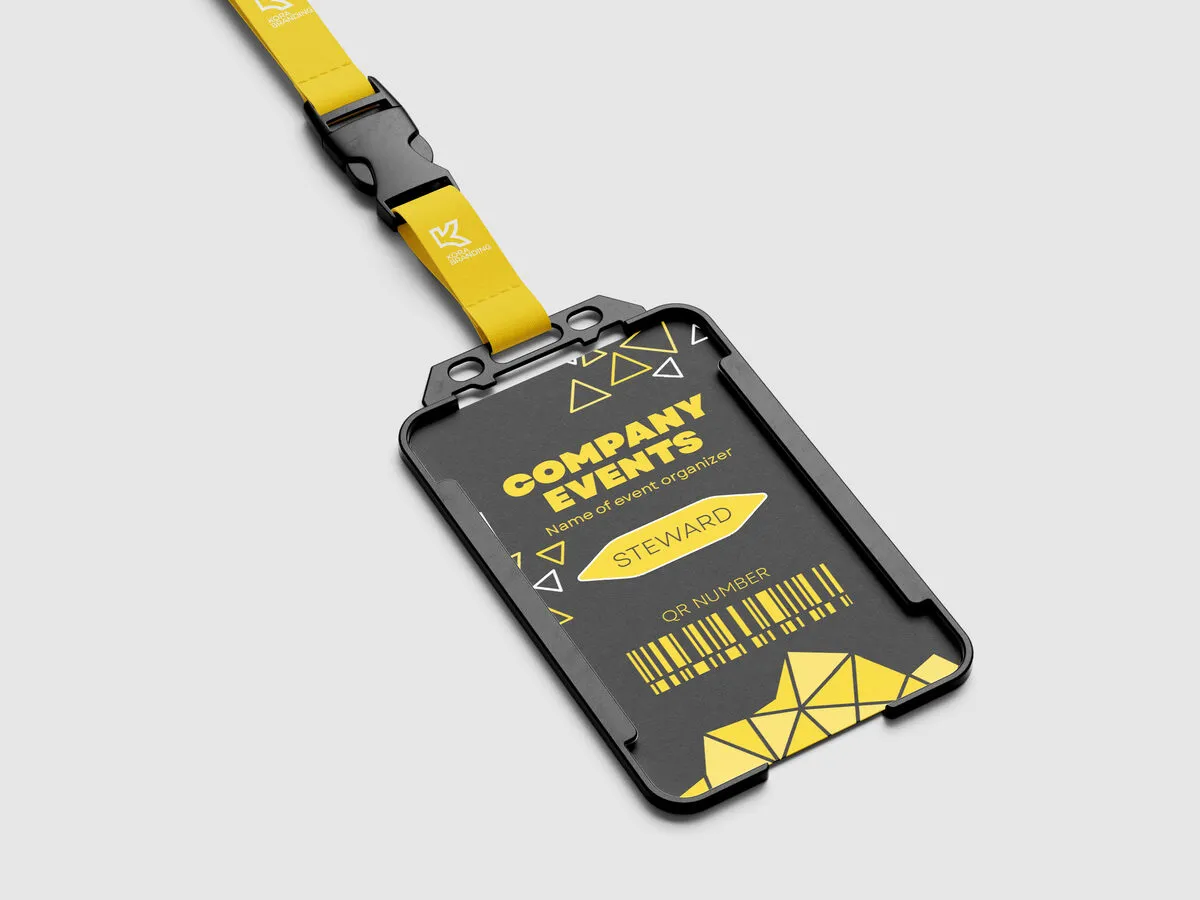
Staff ID cards, visitor badges and event passes are the small prints that decide how organised a business looks at the door. At our Kigali studio a printed ID card starts at RF 3,900, a printed lanyard at RF 2,900, wristbands and button badges at RF 990 each, and event tickets and passes at RF 29,900 per 100. The cheaper the item, the more the price depends on quantity, so the figures below are starting prices and we confirm the exact total with your quote. This guide explains PVC cards against paper badges, which lanyard to choose, what a good card carries, and how to prepare your names and photos so the order goes through in one go.
What ID cards, lanyards and badges cost in Kigali
These are starting prices for printing at our Kigali studio. Size, material, quantity and finishing change the final figure:
- Staff and visitor ID cards - from RF 3,900
- Printed lanyards - from RF 2,900
- Event wristbands - from RF 990
- Button badges - from RF 990
- Lapel pins - from RF 9,900
- Tickets and event passes - from RF 29,900 per 100
- Delegate packs - from RF 6,900
- Name labels - from RF 19,900 per 50
- Artwork setup - from RF 35,900
A simple way to budget: price one card plus one lanyard per person, then add a spare 5 to 10 percent for replacements, new joiners and lost cards. On a team of 40 that is a few extra cards, which costs far less than reprinting a small batch later.
PVC cards or paper badges?
The honest answer depends on how long the card has to live. A PVC card is the plastic bank-card format, usually 85.6 x 54 mm. It survives wallets, rain, sweat and two years of daily use, takes a clean photo and a barcode or QR code, and looks like a permanent part of the uniform. Choose it for staff, regular contractors, school and university members, and anyone who comes back every day.
A paper or card badge in a clear holder is the better choice for a single day or a short event. It costs much less per person, it can be printed the morning before the doors open, and the visitor hands it back or throws it away on the way out. Choose it for conferences, workshops, open days and one-off site visits, where the badge only has to say who the person is and where they may go. If a badge will be reused for a week or more, go to PVC: paper starts to curl in the heat and in Kigali's rainy season it does not last.
A middle option is a PVC card for permanent staff and paper for guests, with the two colours clearly different so a security guard can tell them apart from across a room.
Lanyards: types and widths
A lanyard is the strap that carries the card, and it is the part people wear all day, so comfort matters as much as looks. The usual widths are 10, 15, 20 and 25 mm. Narrow straps suit a light card and a small logo; 20 mm is the sensible standard for staff, because it lies flat on the neck and leaves room for a company name repeated along the strap; 25 mm gives a bolder look for events, where the lanyard doubles as a branding surface.
There are three things to decide. First, the strap: flat polyester prints sharper colour and is the usual choice, while tubular straps feel rounder and suit simple one-colour designs. Second, the fittings at the bottom: a clip or hook that holds a card holder. Third, safety: a breakaway clasp near the neck releases under strain, which matters on a factory floor, a construction site or around moving equipment. Ask us which fittings are available for your quantity; we confirm options and prices with your quote.
Colour is a quiet tool. A single brand colour on every lanyard looks smart. Different lanyard colours for different groups, such as staff, contractors, speakers and visitors, let you spot who is where without reading a single card.
Button badges, lapel pins and wristbands
Button badges are round pin-back badges, popular at campaigns, shop openings, school events and conferences, because they cost very little and people really wear them. Common sizes run from about 25 mm up to 58 mm; the smaller ones read as a logo, the bigger ones can carry a short message or a name. For a more formal staff look, lapel pins in a metal finish are the quiet, lasting alternative.
Wristbands are the fastest access system for crowds. They cannot be passed to a friend once fitted, they go on in two seconds, and they work for a festival, a venue with several entry points or a day with separate zones. For a wider range of event items, see our events category.
What a good ID card carries
The most common mistake is putting too much on a small card. A good layout reads from three metres:
- Photo. Head and shoulders, plain background, same crop for everyone.
- Name. First name large, surname underneath. The first name is what people say out loud.
- Role or department. One short line. "Reception" is better than a long job title.
- Company logo. Top corner, with space around it.
- QR code or barcode. On the back or the lower edge, linked to a staff number so gates, attendance systems or your records can scan it. Ask your system provider for the format before we print, because a code that does not scan is only decoration.
- Colour coding. A coloured band across the top or bottom marks the access level: for example blue for staff, orange for contractors, green for visitors, red for restricted areas. Keep it to four colours at most, and write the group name on the band as well, because a few people cannot tell some colours apart.
- Return line. On the back: "If found, please return to" and a phone number, which gets lost cards back.
Quantities and how many to order
Order for the real headcount, not the budget. For permanent staff, print a full set plus a small spare. For visitors, count the cards that are out at the same time on your busiest day, then add some, because visitor cards are the ones that walk out of the building. For an event, work from confirmed registrations plus walk-ins; our conference printing guide shows how to count delegates, speakers and organisers separately, and our event branding checklist puts badges in the right place on the timeline. Uniforms are usually ordered at the same time as cards, and our staff uniform guide explains how to do both in one go.
Preparing your names and photos
Almost every delay on an ID job comes from the data, not the printing. Send us:
- One spreadsheet with a column for each field: first name, surname, role, department, staff number and access colour. Excel or Google Sheets both work.
- Check the spelling before you send it. A misspelt name on 80 cards is an expensive mistake.
- Photos named to match the spreadsheet, for example the staff number as the file name. Square or portrait, face centred, lit from the front, at least 600 pixels on the short side; a phone photo taken against a plain wall works well.
- Your logo as a vector file or a large PNG. Our guide to print-ready files explains what we need, and our artwork setup service handles messy files.
For large teams, send the data once and we build the design as a template, so adding new joiners later is just a new row.
How to get a quote
Send us your quantity, the card or badge type, the lanyard width and colour if you want one, and the spreadsheet with the photos. We reply on WhatsApp in under 30 minutes during opening hours with a clear quote, and we show you a free proof of the card before anything is printed, so you can check every name and photo. Most jobs are printed the same day, and we confirm the exact time with your quote. We deliver to your office or venue in Kigali and across Rwanda, and your artwork stays on file so reordering for new staff is a quick message rather than a fresh job. Everything we offer is on our paper and print page and our promo gifts page.
Need ID cards or lanyards for your team or event? Tell us how many people, which card type and when you need them - we'll send a clear, itemised quote and a free proof of the card the same day. Request an ID card quote →
Ready to print this?
Send us the product and the quantity: quote in under 30 minutes during opening hours.